Chefchaouen: Why Morocco's Blue City Belongs on Your Itinerary
Where Is Chefchaouen and Why Is It Off the Main Route?
Chefchaouen sits in the Rif Mountains in northern Morocco, roughly two hours from Tangier and closer to four from Fes, far enough from the classic Marrakech–Fes–Sahara loop that it usually requires a deliberate detour rather than a stopover on the way to somewhere else. That distance is part of the appeal — it's exactly why the town still feels calmer than Morocco's more visited medinas, without the volume of day-trippers Fes or Marrakech absorb. The mountain setting also means noticeably cooler air than the plains below, which is part of why it developed as a retreat in the first place.
Why Is Chefchaouen Painted Blue?
There's no single confirmed explanation, though a few competing origin stories persist — some tie the blue to Jewish refugees who settled there in the 1930s, following a tradition of using blue in religious contexts, others to older, more practical explanations like keeping mosquitoes away or symbolizing the sky and heaven. The shade and coverage also vary block by block, since individual residents repaint their own doorways and walls rather than a single municipal program maintaining it. No single account is definitively confirmed, and the town itself doesn't seem especially concerned with resolving the debate, treating the blue as simply what the town looks like rather than a mystery to solve.
What Is There to Do in Chefchaouen's Medina?
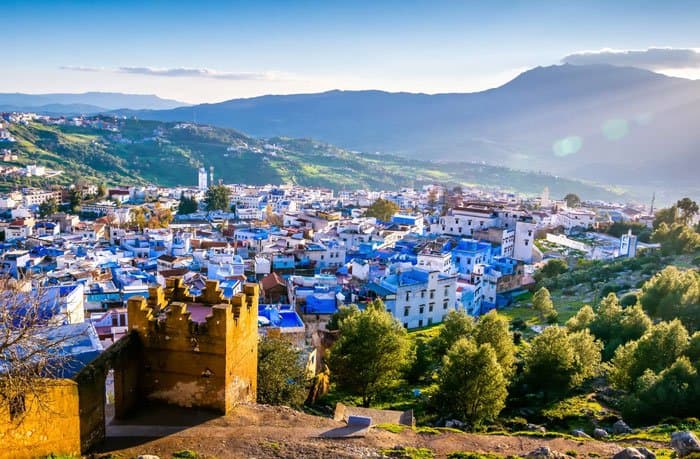
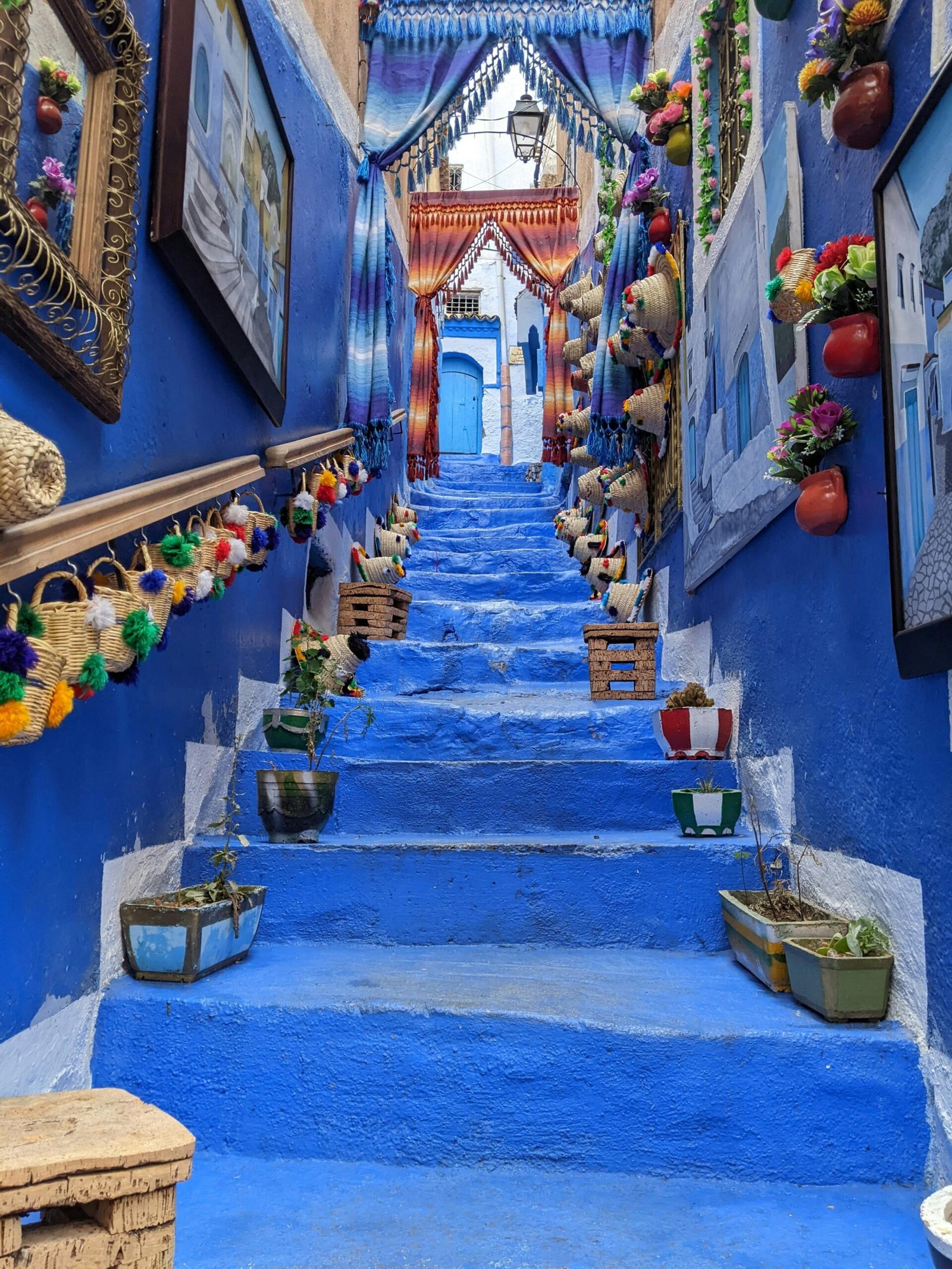
Walking it is the whole point: narrow blue-and-white lanes climbing a hillside, doorways used as makeshift galleries by local artists, and a much slower pace of souk life than Fes or Marrakech. It's also known for handwoven wool goods and goat cheese sold in small shops around the main square, Plaza Uta el-Hammam, which makes for an easy, low-pressure place to browse rather than bargain hard. A short hike above town leads to the abandoned Spanish Mosque, which offers a wide view back over the blue medina and is a popular spot to watch the sunset before heading back down for dinner.
How Do You Fit Chefchaouen Into a Morocco Itinerary?
It pairs naturally with Tangier or a northern Morocco route rather than a desert-focused trip, given how far it sits from Merzouga and the southern kasbah routes — combining Chefchaouen with the Sahara in one trip usually means a longer, more ambitious itinerary that treats the north and south as two separate legs. Our 6-Day Morocco Desert Tour from Tangier routes through Chefchaouen on the way south, so it doesn't have to be a separate trip. Travelers arriving by ferry from Spain in particular often start here before heading south, since it sits close to that entry point already.
Frequently Asked Questions
- Why is Chefchaouen painted blue?
- There's no single confirmed explanation — theories range from a tradition brought by Jewish refugees in the 1930s to more practical reasons like insect deterrence — but the blue has become the town's defining feature regardless of its origin.
- How many days should I spend in Chefchaouen?
- One full day covers the medina at a relaxed pace; two lets you add a hike to the nearby Rif foothills or the Spanish Mosque viewpoint above town.
- Is Chefchaouen easy to combine with a Sahara desert tour?
- It's a long way from Merzouga, so it fits more naturally into a northern Morocco itinerary (with Tangier or Fes) than a desert-focused trip — ask us about routing if you want to include both.