Camel Trekking in the Sahara: Everything You Need to Know
When Do Camel Treks Into the Dunes Usually Happen?
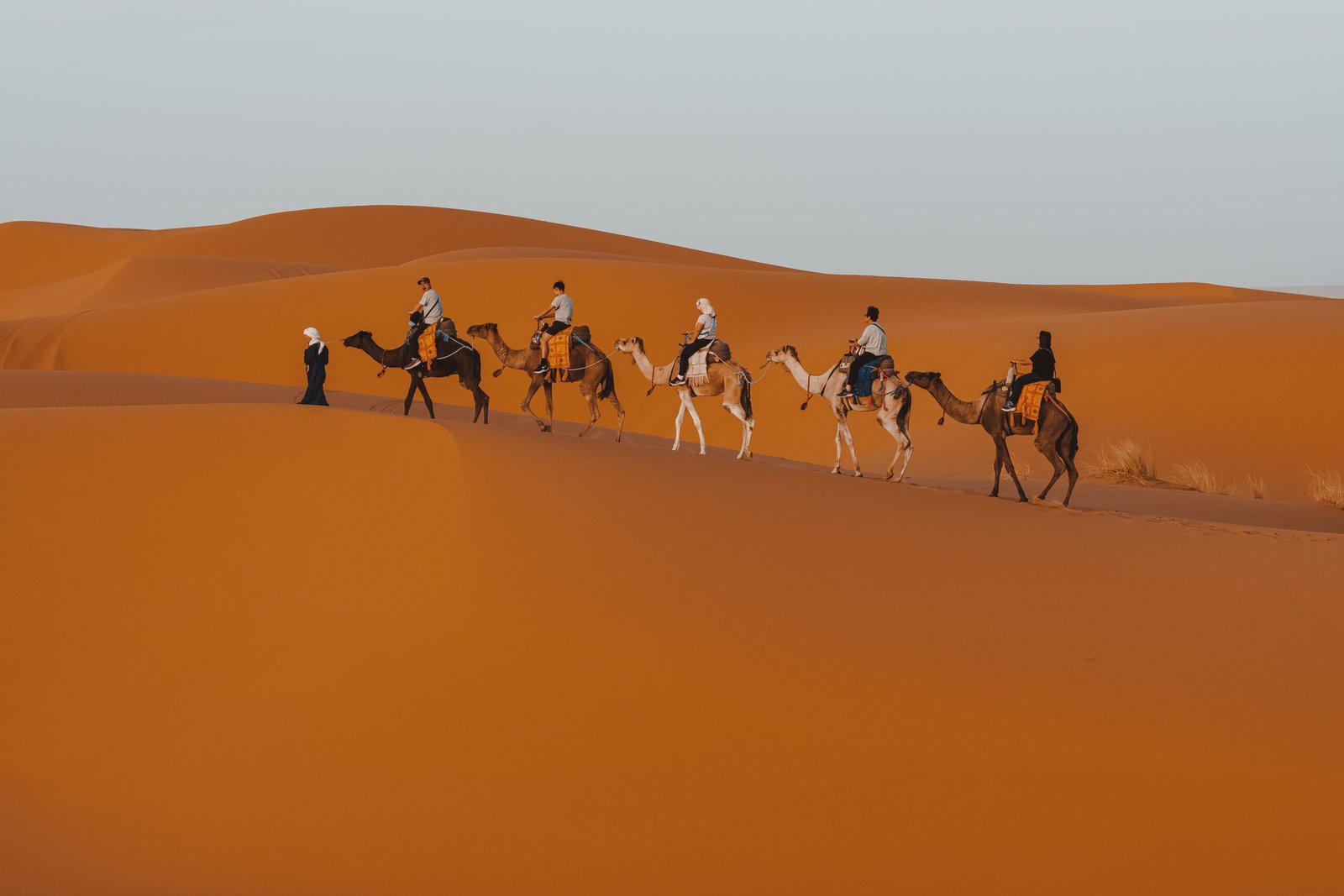
Most treks are timed for late afternoon, both for the temperature and for the photographs, since midday sun flattens the dunes' color and makes riding far less comfortable in the heat. For most travelers, camel trekking is less about the destination and more about the specific hour spent riding into the dunes as the light turns gold, which is exactly why guides schedule it to end around sunset rather than at midday. A smaller number of itineraries also offer a sunrise trek instead, which trades the golden-hour light for cooler temperatures and a quieter stretch of dunes before other camps are awake.
What Does a Desert Camel Trek Actually Involve?
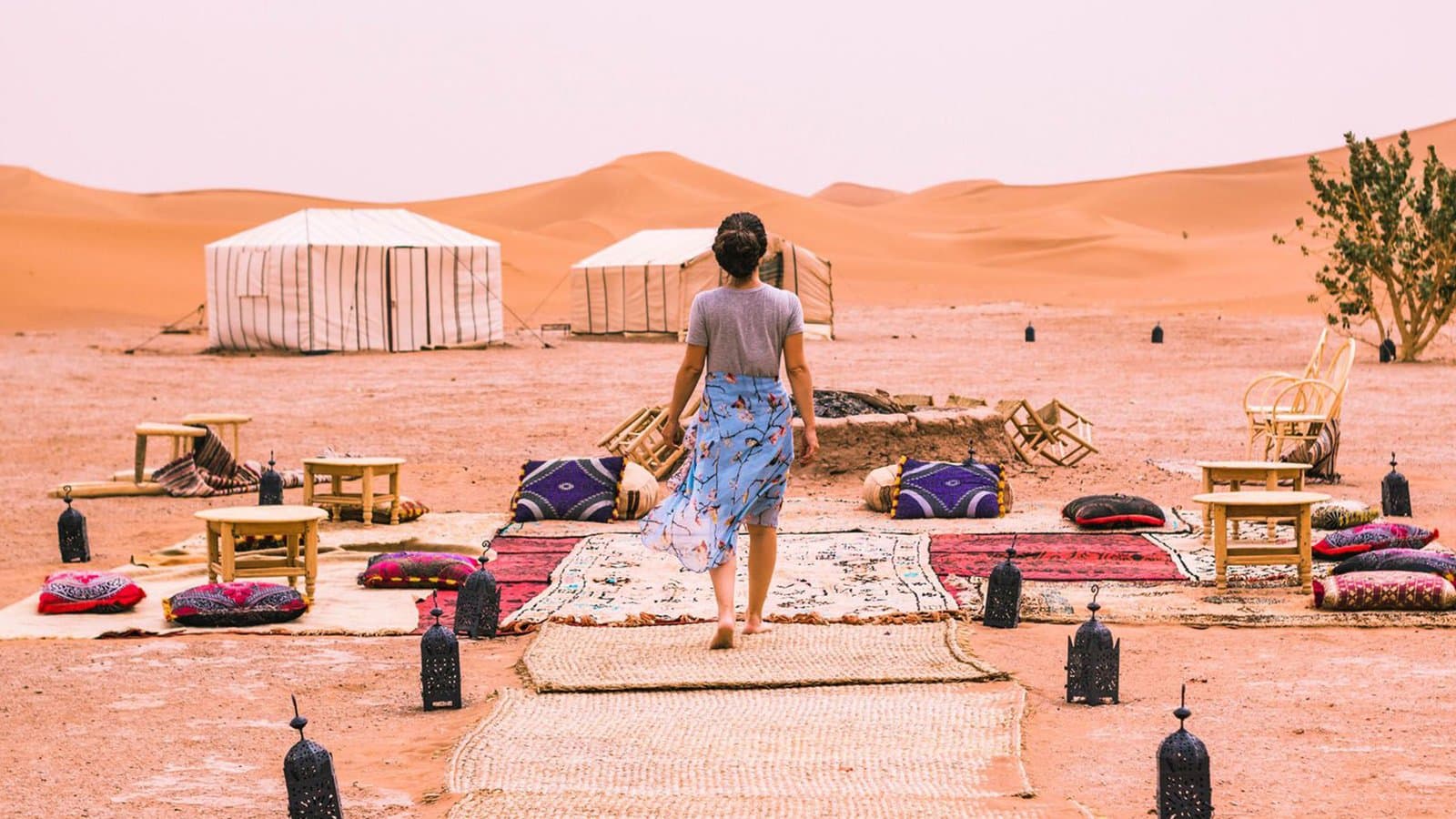
Treks are typically led in a line by a Berber guide on foot, with each camel — technically a dromedary, with one hump — tied to the one in front of it, so riders aren't controlling their own animal directly. Rides into a Merzouga desert camp usually run 45 minutes to an hour each way, enough to feel the rhythm of the walk and take in the scenery without being physically demanding on the rider. Guides typically stop partway for photos at a good vantage point, since the caravan formation itself, silhouetted against the dunes, is one of the more photographed sights of the whole trip.
How Do You Ride a Camel as a First-Timer?
The ride has a rolling, side-to-side motion that takes a few minutes to get used to, and most guides recommend holding the front of the saddle rather than gripping the reins, since the camel is being led rather than steered by the rider. The two moments riders notice most are the camel standing up and sitting back down, both of which happen in a fairly abrupt front-then-back motion — leaning back slightly as it rises and forward slightly as it kneels helps keep balance through both. Loose, comfortable clothing matters more than any special gear — there's no technique to learn beyond staying relaxed through the motion.
What If I Can't or Don't Want to Ride a Camel?
You can still reach the desert camp — most of our desert camps can also be reached by 4x4, so the camel trek is a highlight rather than a requirement for experiencing a night in the dunes. This matters for travelers with back problems, pregnancy, young children who can't safely ride alone, or general motion sensitivity, none of which need to rule out a Sahara trip entirely. The 4x4 route also covers more ground faster, which some travelers actually prefer if they'd rather spend the extra time exploring the dunes on foot once they arrive. If mobility, back problems, or motion sensitivity make riding difficult, it's worth mentioning when you inquire about a specific itinerary so the right vehicle access can be arranged in advance.
Frequently Asked Questions
- Is camel trekking safe for children or older travelers?
- Generally yes, at a walking pace with an experienced guide — let us know ages or mobility concerns when booking so the right camp and vehicle access can be arranged.
- How long is a typical camel trek?
- Most treks to a desert camp run 45 minutes to an hour each way, timed around sunset or sunrise.
- Is it uncomfortable to ride a camel?
- It takes a few minutes to adjust to the motion, but most travelers find a short trek comfortable — longer multi-hour treks are a different, more demanding experience.