How to Pack for a Morocco Desert Tour: Essential Packing List
Why Is Packing for a Desert Tour Different From Other Trips?
It's really packing for two climates in one trip: hot, dry days and surprisingly cold desert nights, sometimes a swing of 20°C or more between the two within the same 24 hours. The biggest mistake first-time desert travelers make is packing only for the daytime heat and freezing after sunset, when temperatures can drop dramatically within an hour of the sun going down. It also helps to pack light in general — most itineraries move between hotels, riads, and a desert camp every day or two, so a single manageable bag beats a large suitcase you have to repeatedly haul across sand. The lists below split what you need by time of day rather than by trip length.
What Should You Pack for Desert Days?
Loose, breathable, light-colored clothing is the foundation, along with a wide-brimmed hat or scarf you can wrap around your face during a windy stretch on the dunes, sunglasses, and strong sunscreen — the sun reflecting off sand is more intense than it looks. Closed shoes are more useful than sandals once you're actually walking on hot sand, which holds heat longer than most people expect, though many travelers switch to sandals for the camel ride itself since footwear comes off before mounting anyway. Lightweight long sleeves are worth packing too, since they protect against sun exposure better than repeated sunscreen reapplication on a full day outdoors.
What Should You Pack for Desert Camp Nights?
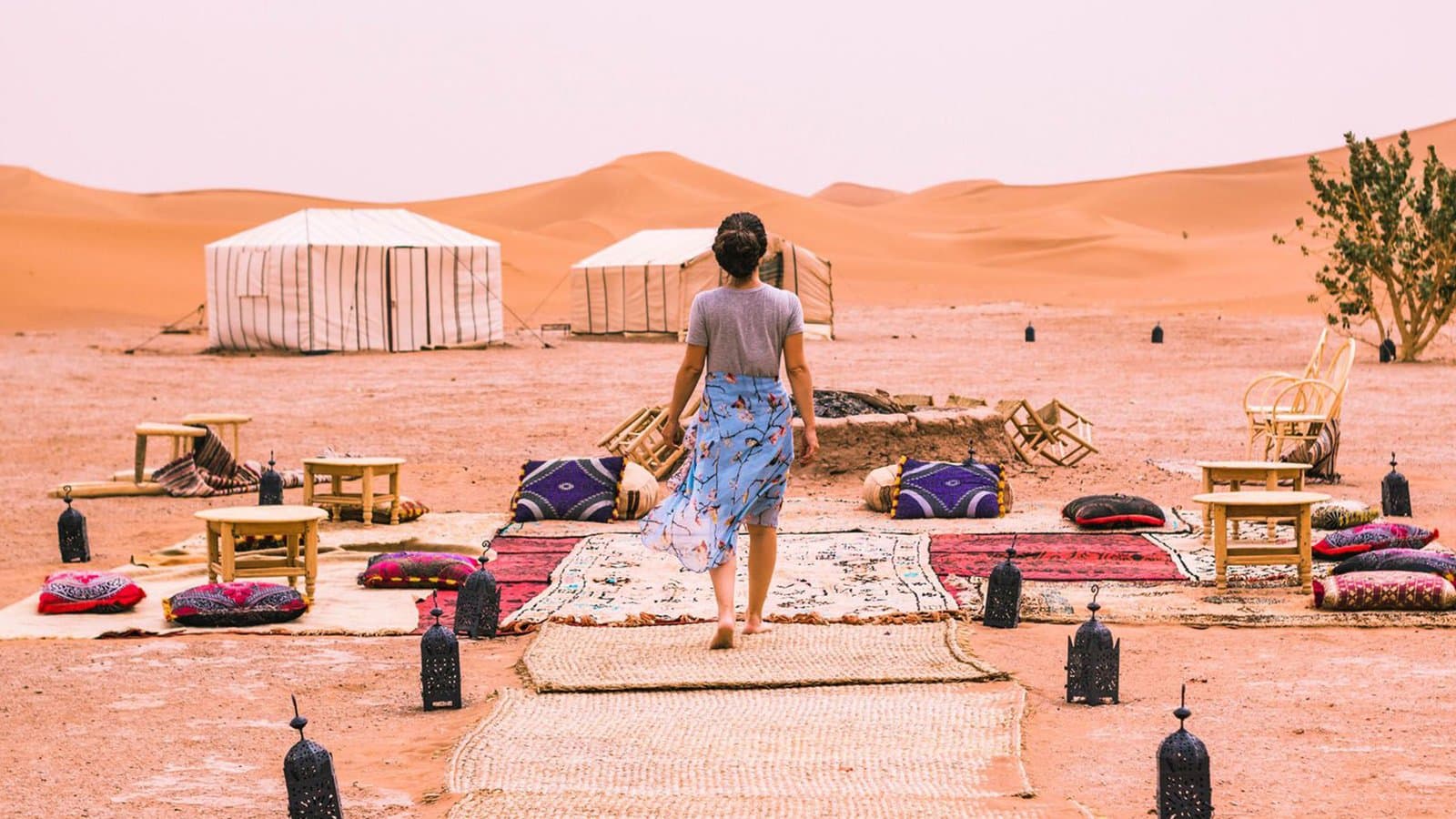
At least one warm layer is essential, even in summer, plus long trousers for the camel ride back at sunrise when temperatures are at their lowest point of the whole trip. A fleece or light jacket usually covers it outside of winter, when a genuinely warm coat and gloves are worth the extra bag space instead. A headlamp or small flashlight is genuinely useful too, since camps typically run on generator or solar power with limited lighting after dinner ends, and finding your tent or the washroom in full dark without one is more disorienting than it sounds. Thick socks are worth adding to the list as well, since sand holds the day's heat but the ground itself cools quickly once the sun is down.
What Extras Are Worth Packing for a Desert Tour?
A portable battery pack matters more than it sounds, since charging isn't reliable at desert camps, along with a dust-proof bag or case for cameras and phones and a reusable water bottle — hydration matters more than most people expect in dry desert air. Wet wipes and hand sanitizer earn their space too, since running water can be limited at camp, and a small daypack is more useful than a full suitcase for the camel-and-4x4 legs of the day. If you're joining a multi-day desert tour, your driver-guide can also tell you exactly what a given itinerary's camp setup includes before you pack.
Frequently Asked Questions
- Do I need a sleeping bag for a Sahara desert camp?
- Usually not — camps provide blankets and bedding, but bringing a light liner or extra layer is a good idea if you tend to feel the cold.
- Should I bring cash to the desert?
- Yes — smaller towns and camps often don't take cards, so carrying Moroccan dirhams for tips, drinks, and small purchases is worth it.
- Are sandstorms common on desert tours?
- They're occasional rather than routine, more likely in spring; a scarf or buff to cover your nose and mouth is a simple precaution worth packing regardless.