Desert Safety Tips: How to Prepare for Sahara Heat and Sun
Why Is Desert Heat More Dangerous Than It Feels?
Because there's so little humidity, it's easy to underestimate how much water and shade you actually need, especially in the exposed hour or two around midday. The Sahara's dry heat is deceptive in exactly this way — it doesn't feel as oppressive as humid heat at the same temperature, since sweat evaporates almost immediately in dry air rather than sitting on the skin as an obvious signal you're overheating. That's precisely why people under-hydrate without noticing until symptoms like headache or fatigue show up, well after the dehydration has already started. Wind can make the same deception worse, since a breeze feels cooling even while it accelerates fluid loss through faster evaporation.
How Much Water and Sun Protection Do You Actually Need?
More than feels necessary, and on a schedule rather than reactively. Drink water steadily through the day rather than only when you feel thirsty, and add an electrolyte supplement if you're out during the hottest hours, since plain water alone doesn't replace the salts lost through sweat during a full day outdoors. Direct sun exposure adds up fast, so sunscreen reapplied every couple of hours, a hat, and sunglasses are worth treating as non-negotiable rather than optional extras — sand reflects sunlight back upward as well, which means exposed skin gets hit from two directions at once, not just from overhead. The CDC's guidance on extreme heat covers the same hydration and sun-exposure basics and is a good general reference if you want more detail beyond desert-specific tips.
How Should You Time Activities Around the Heat?
Schedule anything active for early morning or the last hours before sunset, and treat midday as rest time rather than pushing through it. Most desert itineraries already build this in — camel treks and dune walks are timed to avoid the punishing midday sun, which is also when the light is best for photos anyway, so the safety-driven schedule and the best-looking schedule end up being the same one. If you're prone to heat sensitivity, ask your driver-guide about adjusting the day's pace further, including starting drives earlier to avoid being on the road during the hottest stretch. Midday itself is a good window to catch up on rest inside a shaded vehicle or riad rather than treating it as wasted time. Every multi-day desert tour we run already builds this pacing into the itinerary rather than leaving it to chance.
Are Cold Desert Nights a Safety Concern Too?
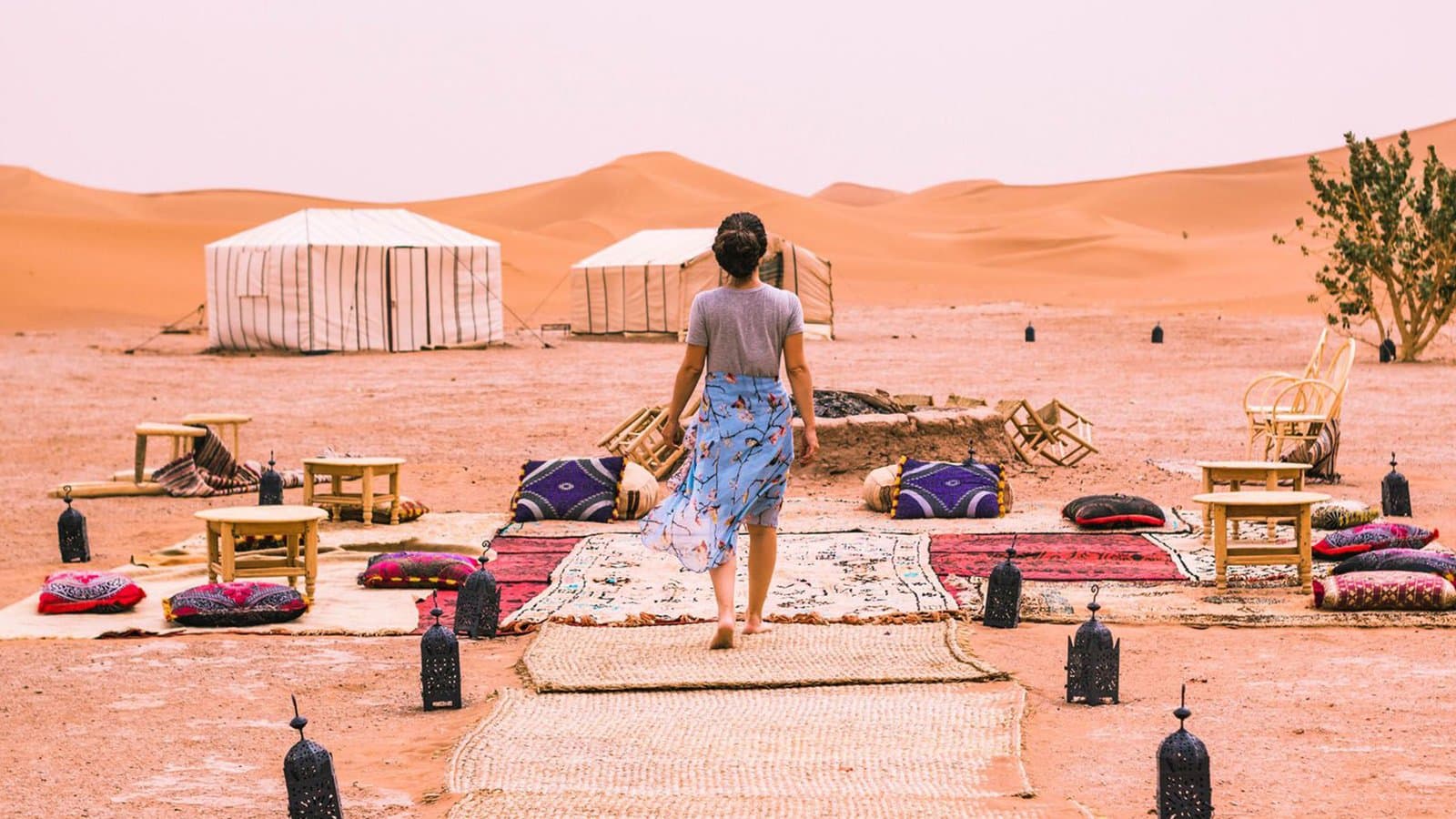
Yes — temperatures can drop sharply after sunset, which is the opposite risk from the daytime heat and just as easy to underestimate, especially for travelers who packed heavily for the heat and assumed the desert would stay warm all night. Treat warm layers as part of your safety kit, not just comfort, since a poorly prepared cold night can undo the benefit of having managed the daytime heat well. This swing is most dramatic in winter, when a warm afternoon can give way to a night close to freezing once the sun is fully down — see our guide to a first night in a desert camp for what that temperature drop actually feels like after dark. If you're managing a health condition that heat, cold, or altitude changes could affect, mention it when you book so your itinerary and camp choice can be adjusted accordingly.
Frequently Asked Questions
- How hot does the Sahara actually get?
- Summer daytime temperatures in the Merzouga area regularly exceed 40°C (104°F), while nights — even in summer — can feel surprisingly cool once the sun is down.
- What's the biggest desert safety mistake first-time visitors make?
- Underestimating water needs and sun exposure because the dry heat doesn't feel as intense as humid heat — hydration and shade need to be deliberate, not reactive.
- Is it safe to travel to the Sahara with a medical condition?
- Many conditions are manageable with some planning — let us know when booking so we can suggest a pace, vehicle, and camp setup that works for you.