The Ultimate Guide to Aït Ben Haddou: Morocco's Most Filmed Kasbah
What Is Aït Ben Haddou?
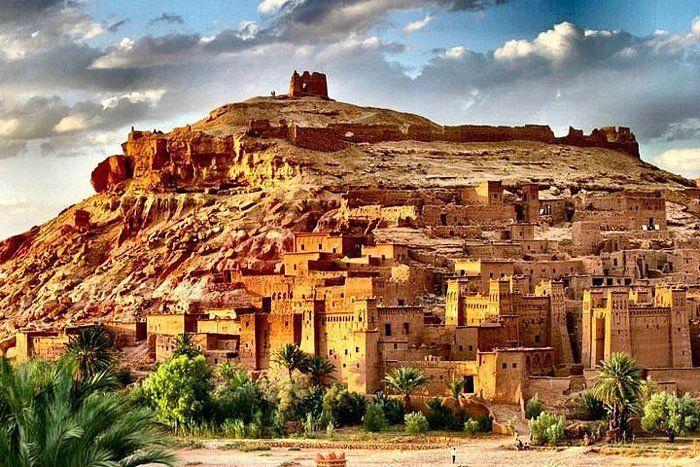
It's a fortified ksar — a cluster of earthen kasbahs behind defensive walls — built along a former caravan route between the Sahara and Marrakech, long before it ever appeared on screen. The site dates back several centuries, though most of the visible structures were rebuilt repeatedly over time using the same rammed-earth technique, since the material naturally erodes and needs periodic renewal. Its rammed-earth architecture is largely unchanged in form, which is exactly why UNESCO listed it as a World Heritage Site in 1987, recognizing it as an exceptional example of traditional pre-Saharan earthen construction. Its position on the old caravan route also meant it once played a genuine commercial role, not just a defensive one, sheltering traders moving goods between the Sahara and Marrakech.
Why Has Aït Ben Haddou Been Used in So Many Films?
Film crews noticed the same qualities that got it UNESCO status: production designers have used it as a stand-in for ancient Rome, Jerusalem, and Egypt over several decades, and more recently for filming tied to Game of Thrones. Its scale, intact defensive walls, and warm-toned architecture let it read convincingly as almost any pre-modern setting on camera, which is exactly what keeps productions coming back generation after generation. A handful of families still live within the walls, which is part of why preservation has been an ongoing, lived-in process rather than a one-time restoration for tourism or filming. Some of those families also run small shops and cafés inside the ksar, so tourism revenue has become part of what sustains the community that still calls it home.
What Is It Like to Visit Aït Ben Haddou Today?
Most visitors cross the seasonal river on foot (or by mule when it's running higher) and climb through the ksar to a viewpoint at the top, the best spot for the wide shot everyone recognizes from photographs. The climb winds past small shops and a couple of cafés built into the lower structures, so it's not a rushed straight line to the top even for visitors moving quickly. Morning light works best for photography — the reddish clay walls are more dramatic before the midday sun flattens the color and washes out the contrast. A local guide is worth hiring at the entrance, both to point out details easy to miss and to support the families still living within the walls.
Where Does Aït Ben Haddou Fit on a Morocco Itinerary?
It sits directly on the route between Ouarzazate and Marrakech via the Tizi n'Tichka pass, which makes it a natural stop rather than a special detour on most southern Morocco itineraries. Because it's so close to Ouarzazate itself, many routes pair the two in the same half-day, combining the kasbah with a visit to the Atlas Studios film sets before continuing over the pass. It's built into our Ouarzazate to Merzouga route the same way, as part of the same driving day rather than requiring extra time. Travelers heading the opposite direction, from Marrakech toward the desert, pass through just as naturally on the way down from the High Atlas.
Frequently Asked Questions
- Is Aït Ben Haddou worth visiting if I've already seen other kasbahs?
- Yes — its scale and preservation are unusual even by Morocco's standards, and it's one of the few ksars where you can walk all the way through rather than just view from outside.
- How long does a visit take?
- Most travelers spend one to two hours walking through and up to the viewpoint, though it fits naturally into a longer day that also includes Ouarzazate.
- What movies were filmed at Aït Ben Haddou?
- It has appeared in numerous productions over the decades, including Gladiator and Kingdom of Heaven, plus location work associated with Game of Thrones.