Best Time to Visit Morocco: A Season-by-Season Guide
Is There One Best Time of Year to Visit Morocco?
No single month is best for every kind of trip — the right timing depends on which region you're prioritizing. Morocco's size works in its favor: while the Sahara is baking in July, the Atlantic coast stays mild, and the High Atlas can still hold snow into April. A traveler chasing coastal weather and a traveler planning a Sahara camp night should genuinely be looking at different months, even though both are visiting the same country in the same season. Think in terms of a best month for the kind of trip you're planning rather than a single best month for Morocco overall, and let the region you care about most, not the calendar, drive the decision.
What's Morocco Like in Spring (March–May)?
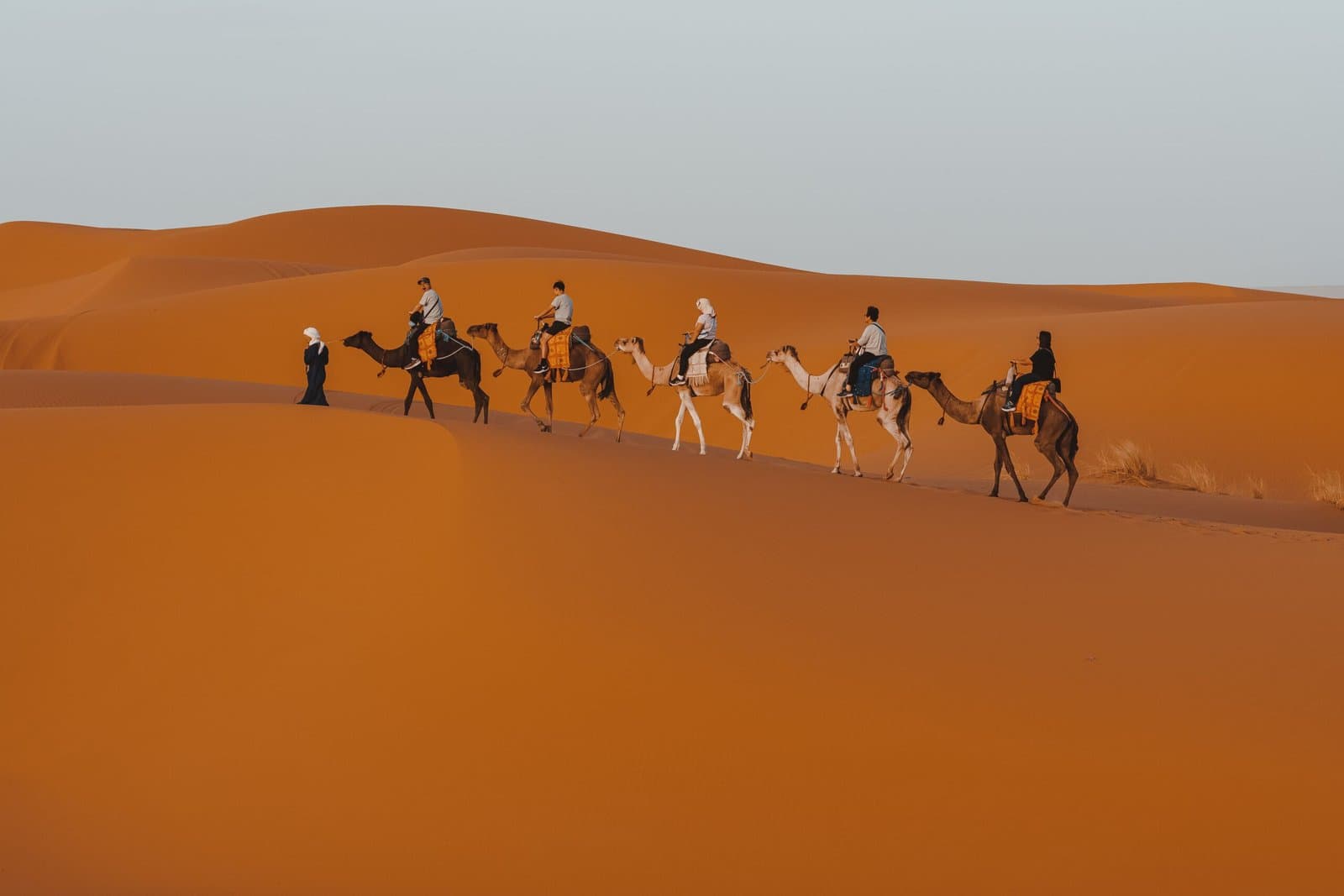
Spring is generally the sweet spot for a desert-and-cities itinerary, and it's the season most of our own itineraries get booked for. Daytime temperatures in Marrakech and the Sahara are warm rather than punishing, and nights in a desert camp are cool without being cold, which makes it comfortable for camel treks, hiking in the gorges, and long driving days without either extreme working against you. It's also when the Valley of Roses near Kelaat M'Gouna is in bloom, timed around the town's annual rose festival, which adds a seasonal reason to route through the region specifically in April or May. The High Atlas can still carry snow at elevation early in spring, so mountain-pass crossings like Tizi n'Tichka are worth checking if you're traveling in March.
What's Morocco Like in Summer (June–August)?
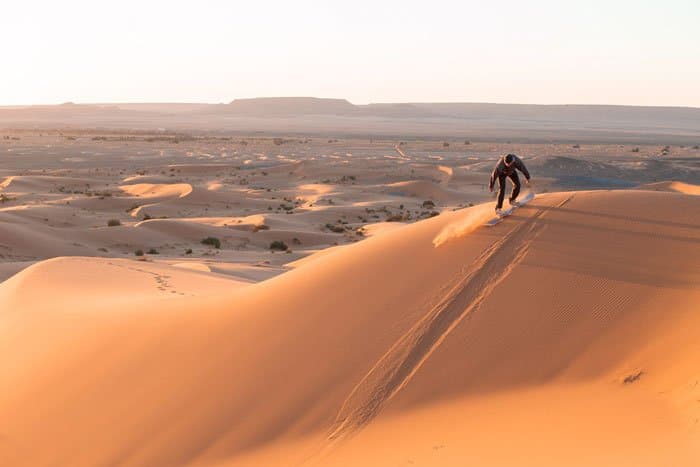
Summer works well for a trip built around the coast, the Rif Mountains, or Chefchaouen, but it's the toughest season for the desert. Afternoon temperatures in Merzouga and Zagora regularly climb past 40°C, which is worth planning around rather than fighting — most of our desert itineraries schedule dune activities for early morning or late afternoon for exactly this reason, keeping the hottest hours for travel or rest instead. Desert camp nights still cool down noticeably after sunset even in August, so the discomfort is really concentrated in the midday hours rather than the whole day. If a desert component is non-negotiable for a summer trip, building in more rest time and shorter driving days makes more difference than any particular gear choice.
What's Morocco Like in Fall (September–November)?
Fall offers a near-mirror of spring's comfortable conditions once the summer heat breaks, making it just as strong a choice for combining cities and desert — daytime temperatures settle back into a comfortable range across most of the country by mid-September, and desert camp nights are cool rather than bitterly cold. The added benefit is thinner crowds at the major sites, since fall falls outside both the peak spring travel window and the winter-holiday season, which means shorter lines at places like Aït Ben Haddou and Volubilis and a bit more room to negotiate in the souks. Late fall does start to overlap with the wetter months in the north, so a route through Chefchaouen or Rabat in November is worth checking a forecast for before you pack.
What's Morocco Like in Winter (December–February)?
Winter is Morocco's quiet season: mild and pleasant in Marrakech and along the coast, but genuinely cold at night in the desert and the Atlas passes. Daytime temperatures in the cities still sit comfortably in the high teens to low twenties Celsius, which makes winter a legitimate option for a culture-heavy trip even if the Sahara isn't the main draw. It's a good time for smaller crowds at sites like Aït Ben Haddou, as long as you pack for nighttime temperatures near freezing in the dunes rather than assuming Morocco's reputation for heat applies year-round. High Atlas passes like Tizi n'Tichka can also see occasional snow closures in January and February, so it's worth building flexibility into a winter itinerary that crosses the mountains.
Frequently Asked Questions
- Is the Sahara too hot to visit in summer?
- Daytime heat is intense, but many travelers still visit in summer by scheduling camel treks and dune activities for early morning or after sunset — evenings in the desert cool down quickly even in July and August.
- Does it snow in Morocco?
- Yes — the High Atlas and Middle Atlas mountains regularly see snow in winter, sometimes as late as April at higher elevations, even though the desert and coast stay mild.
- What's the rainiest time of year?
- Morocco's wetter months are generally November through March, concentrated in the north and along the coast; the Sahara itself sees very little rainfall year-round.